
Pool Crack, Concrete, and Leak Repair in Connecticut
Swimming pool concrete repair that starts with the structure, not the plaster.
A crack in the shell and a water level you keep topping off look like two problems. On a gunite pool they are often the same one, and the order you fix them in decides whether the repair lasts.
We find where the water is going, repair the concrete that is failing, and only then put a finish over it. Estimates are free across Connecticut.
Structural pool repair in Connecticut, before and after
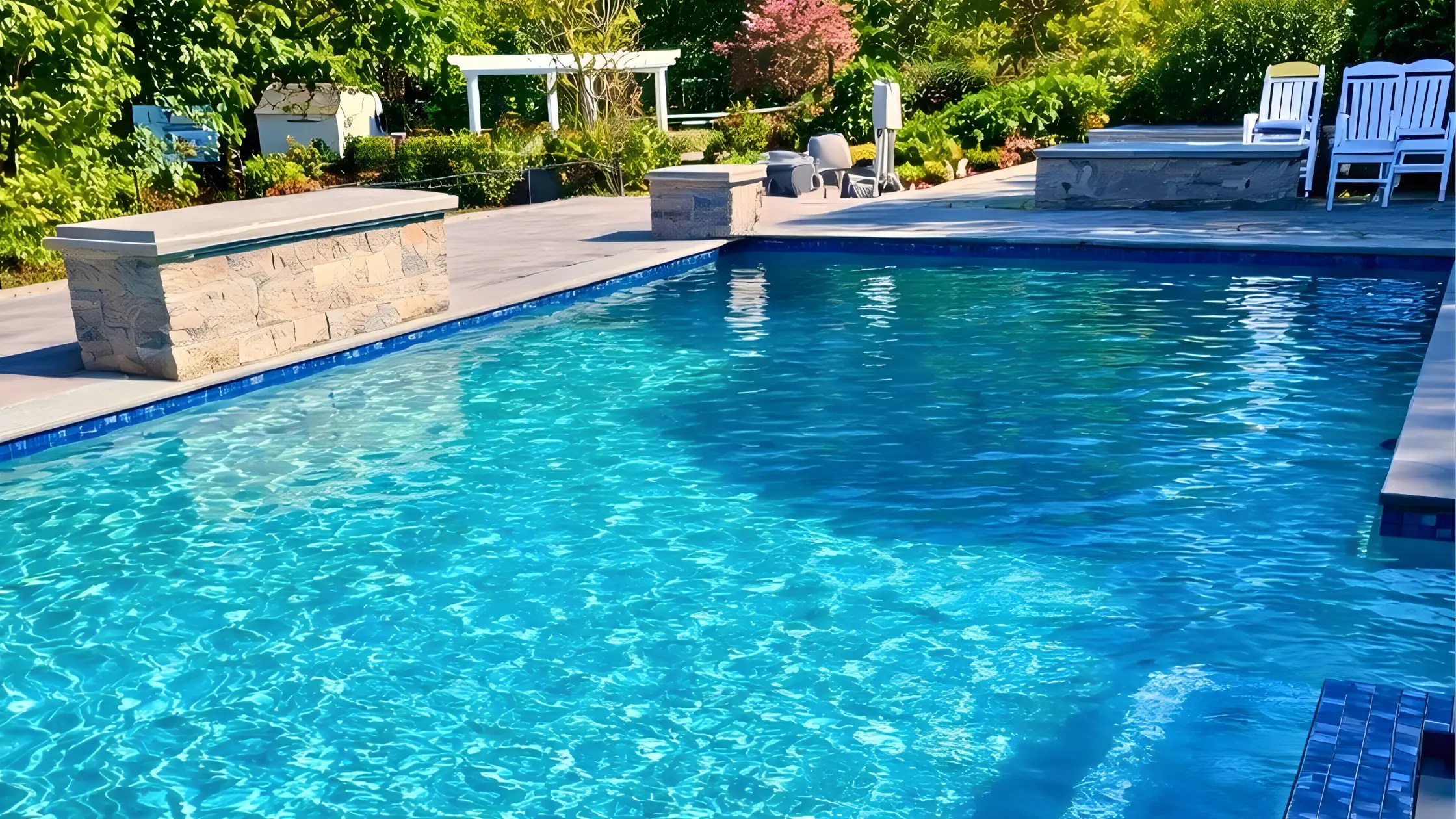
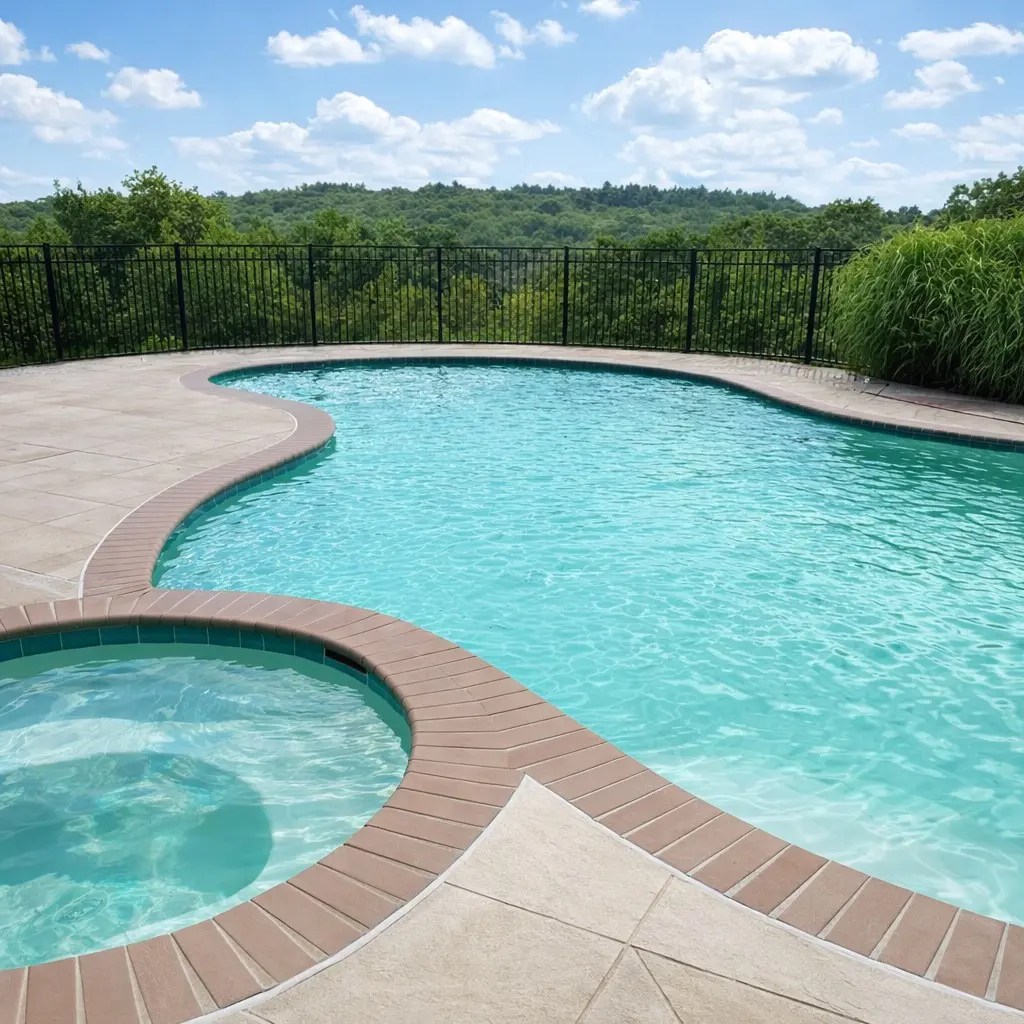
A finish only lasts as long as the concrete under it. Here is one Connecticut pool, as we found it and as we left it.

Before. The pool as we found it.

After. The same pool, finished.
Pool crack, pool leak, or both? Start with what you can see.
Most calls start with one symptom. Here is what each one usually means on a Connecticut gunite pool, and what the repair involves.
Cracks in the pool shell
Bond beam and coping edge
Pool deck cracks
Losing water
Plumbing lines and fittings
Skimmers, steps, and benches
Is your pool leaking? Run the bucket test before you call.
It is free, it takes 24 hours, and it answers the question everything else depends on: evaporation, or water actually leaving the pool.
- Fill a bucket with pool water and set it on the top step, weighted down with a rock.
- Mark the water line inside the bucket and the pool level on the outside of it. Painter’s tape works.
- Pump off, autofill off, no swimmers, for 24 hours.
- Compare. The bucket only loses water to evaporation. If the pool dropped more, water is leaving another way.
- Repeat with the pump running. A bigger drop with the pump on points at the plumbing.
Write down the starting level, the 24-hour level, and the drop for both runs. Those numbers cut real time off pool leak detection, and they are the first thing we will ask you for. The full bucket test, with a printable worksheet.
A pool leak with a crack is never just a leak.
Where the water goes matters. So does what it does to the concrete on the way out.
Leak only
Leak plus a crack
If the bucket test points at a leak in September, settle it in the fall, not in May. Closing a gunite pool for winter.
How pool leak repair and structural repair run, start to finish
1. Look first
2. Find the source
3. Written scope
4. Structure first
5. Then the finish
6. Refill and watch the level
What moves the cost of pool leak repair and pool concrete repair
We are not going to publish a price that pretends every crack is the same. Here is what actually moves a quote.
- Where the problem is. A leak at a light niche is a different job from a line under the deck.
- Whether the crack is active. A stable crack gets sealed and watched. A moving one gets cut out, rebuilt, and its cause fixed.
- What sits on top of it. Coping, tile, and plaster over a repair have to come up and go back down.
- What moved it. Drainage, grade, or a failed expansion joint gets priced with the concrete, or the crack comes back.
- When you call. A crack found in September and repaired before winter is a smaller job than the same crack in May.
Ask for a written scope and you get the number for your pool. Estimates are free. What a pool remodel costs in Connecticut.

What homeowners say about the structural work
“Greg gave us some straight talk about our pool’s condition that we really needed to hear. … explained why we needed to address the shell integrity before doing the finish.”
Jacob S., Rocky Hill, CT. More from homeowners.
Pool crack and leak repair questions
Run the bucket test. In a Connecticut summer, losing up to about a quarter inch a day to evaporation is ordinary. If the pool drops more than a bucket of pool water sitting on the step, the loss is not weather. Here is how to run it.
Width over an eighth of an inch, edges offset from each other, a crack that keeps growing, or a crack paired with water loss. Any of those points past the finish and into the shell. Mark the ends with a pencil and check back in a month. A crack that grew is active.
Almost always. Concrete pool repair on a structural crack means cutting it out, stitching or injecting it, and rebuilding. The part that makes it last is fixing the cause of the movement, not just the crack.
Resurfacing fixes finish problems. A structural crack telegraphs right through new plaster, usually within a season or two. Structure first, finish second. How gunite pool resurfacing works.
Finding the leak is the first step of every leak repair we take on. Run the bucket test, call 860-256-9219 with your numbers, and we will tell you where the water is likely going and what happens next.
It depends on where the leak is and whether the concrete around it is involved. A failed seal at a fitting and a leak paired with a shell crack are very different jobs. You get a written scope with the diagnosis next to the price, and the estimate is free. What moves the number.
Yes. Stable cracks get flexible sealant, surface damage gets patched or overlaid, and heaved or settled sections get cut out and repoured on a corrected base. Fix the water first, then fix the concrete once. More on deck cracks.
Yes. Gunite and shotcrete are both concrete, and repair works the same way on both. We do not repair vinyl or fiberglass pools. What gunite is and how it differs.
Yes. Water in a crack freezes, pries it wider, and lets in more water. A leak or an active crack left through a Connecticut winter is usually a bigger repair by spring.
Across Connecticut, working out of East Hampton. Call 860-256-9219 and we will tell you honestly if you are outside our range.
Seeing a crack or losing water?
Tell us what you are seeing, and send photos and your bucket test numbers if you have them. We will tell you whether it needs a visit. If it turns out to be cosmetic, we will tell you that too.
Free estimates for pool leak repair and structural repair across Connecticut.