
Closing a gunite pool is eight steps, and only three of them are about water chemistry. The rest are about one idea: get water out of everything that can freeze, and keep water away from everything the freeze can pry. Do that well and winter is a non-event. Do it casually and spring introduces you to your bond beam.
Key takeaways
- Balance chemistry BEFORE the water drops; balanced water protects the finish for four months, not four days.
- Water level goes below the skimmer mouth and returns, not to the floor. A drained gunite pool can crack or float.
- Blowing out the lines is the step that prevents the expensive failures. Plugs and antifreeze back it up.
- The cover is the last step, not the first fix. What it hides in October is what you inherit in April.
Before you start: timing and a walk
Close when water temperature holds consistently below about 60 degrees, usually late September into mid October here. Before anything else, walk the pool with a notepad: coping stones that rock, expansion joint gaps, tile that sounds hollow, cracks that changed since spring, and water level behavior over the last month. Anything you write down now is a fall repair; anything you miss is a spring project.
The eight steps, in order
Balance the water
Adjust pH, alkalinity, and calcium hardness to spec while the pool is still full and circulating. Balanced water sitting all winter protects plaster; aggressive water etches it for four months straight.
Deep clean
Brush walls, vacuum the floor, and empty baskets. Organic debris left under a cover becomes stains and spring algae fuel.
Shock and add winterizer
Shock, let it circulate and dissipate, then add winterizing algaecide. Order matters; strong chlorine destroys algaecide added too soon.
Lower the water level
Drop below the skimmer mouth and below the returns, typically a handful of inches, not to the floor. Follow your cover type; mesh covers want a lower level than solid.
Blow out the lines
Clear water from skimmer lines, returns, main drain, and any spa or feature plumbing with a blower, then plug them. This is the step that prevents cracked underground pipe.
Add pool antifreeze
Non-toxic pool antifreeze in the lines is the backup for whatever the blower left behind. Never automotive antifreeze.
Drain and store equipment
Pump, filter, heater, and chlorinator all get drained. Freezing water in a pump housing or filter body cracks both, and they are not cheap sentences.
Cover it
Install and secure the cover, tension it properly, and plan to clear standing water and leaves through the season. A sagging, loaded cover is a hazard and a stain factory.
Protecting the shell, not just the plumbing
Most closing guides stop at the equipment. On a gunite pool, the shell and its edge deserve the same attention, because that is where Connecticut does its real damage.
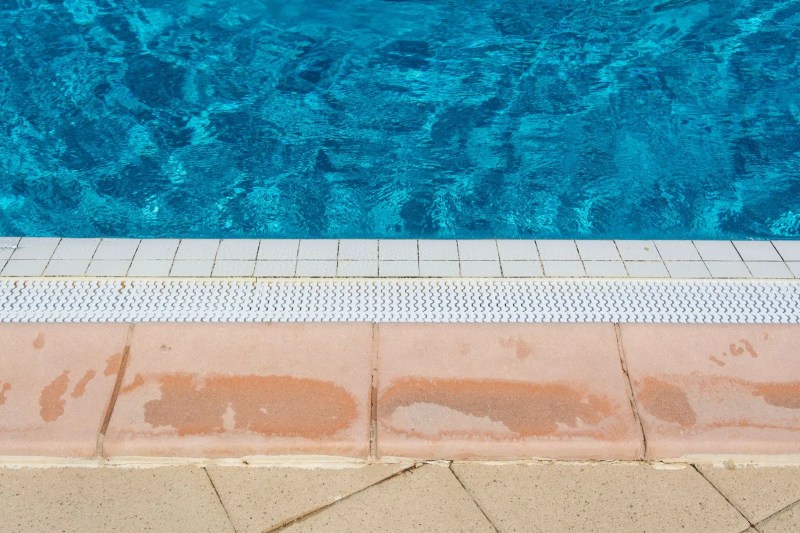
The edge system: tile, coping, and the joint above them. Water that gets behind this line is what freeze-thaw uses.
Three things protect the structure over winter. First, the expansion joint between deck and coping should be intact, so rain and melt cannot run behind the pool wall. Second, the coping should be sound, with no rocking stones inviting water onto the bond beam. Third, the tile line should have no open grout or missing tiles for water to sit behind. Fix those in fall and the freeze has nothing to work with.
Do not drain a gunite pool for the winter
Emptying the pool removes the weight that holds the shell down against groundwater and lets it dry out unevenly. In a wet Connecticut spring, an empty shell can crack or lift. Lower the level as your cover requires; do not empty it.
The mistakes we see most
| Mistake | What it costs |
|---|---|
| Closing while the water is warm | Spent chemicals and a green spring opening |
| Skipping the line blowout | Cracked underground plumbing, found by a leak next summer |
| Draining the pool completely | Shell cracking or floating; the most expensive shortcut on the list |
| Ignoring a loose coping stone | Four months of water on the bond beam |
| Leaving the cover unattended | Standing water, stains, and a safety hazard |
| Automotive antifreeze in the lines | Toxic contamination and a spring cleanup nobody wants |
What spring will tell you
A good closing is invisible: the cover comes off, the water is clear-ish, lines charge without air, and the edge looks like it did in October. A rushed closing announces itself as green water, air in the pump, a new crack at the tile line, or a coping stone that moves under your hand. The pool grades your October work in April, and the grading is not gentle.
The GS Rose position on winter
We would rather look at your pool in September than in May. Winter does not create problems so much as enlarge the ones already there, and the enlargement rate in Connecticut is brutal. Whatever you find during closing, price it in fall.
Found something while closing up?
Call before the cover goes on and describe it. We will tell you what winters safely and what genuinely should not wait.
Free download: the Connecticut pool closing checklist
Timing, chemistry, the eight-step sequence, and the fall inspection walk, on one page you can take outside.
Frequently asked questions
How do I winterize an inground gunite pool?
Balance chemistry, clean, shock and add winterizer, lower water below the skimmer and returns, blow out and plug the lines, add pool antifreeze, drain the equipment, and cover it. Order matters at nearly every step.
How low should the water be for winter?
Below the skimmer mouth and returns, typically a few inches, and per your cover manufacturer. Mesh covers want a lower level than solid covers. Never drain the pool completely.
Do I have to blow out the pool lines?
In Connecticut, yes. Water left in underground plumbing freezes and cracks pipe, and those breaks usually surface as mystery leaks the following summer.
Can I close my pool myself?
A careful owner can, with a proper blower and the right chemicals. The steps that punish mistakes hardest are the line blowout and the water level, so if you are unsure on either, hire the closing.
What if I find a crack or loose coping while closing?
Get it evaluated before the cover goes on. Water reaching a shell or beam all winter, freezing and thawing dozens of times, is how a small repair becomes a structural one by spring.
Fall is the smart repair window
GS Rose Construction handles structural repair, tile, coping, and resurfacing across Connecticut through fall so spring opens clean. Estimates are free.
Request an estimate