
Here is the honest version: most pool cracks are cosmetic, some are structural, and the difference usually comes down to three things you can check yourself. Width. Pattern. Movement.
Key takeaways
- A fingernail is the field gauge: cracks that will not catch a nail are usually cosmetic crazing in the plaster.
- Anything over an eighth of an inch wide, or with one edge sitting higher than the other, points at the shell.
- Mark the crack ends with a pencil and check back in a month. A crack that grew is active, and active cracks do not heal.
- Resurfacing does not fix structural cracks. Structure first, finish second, every time.
Read the width first
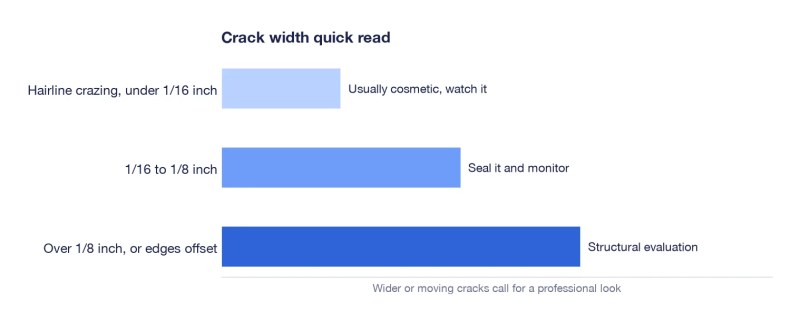
A fingernail is a decent field gauge. If the crack will not catch a nail, it is hairline and probably lives in the plaster. If it catches, measure it. Anything over an eighth of an inch, and especially any crack where one side sits higher than the other, has our attention.
Whether your shell is gunite or shotcrete, it is all concrete, and concrete pool crack repair starts with the same three reads. Width alone does not settle it, though. A narrow crack in the wrong place can matter more than a wide one in the right place, which is why the next two checks exist.
Then read the pattern
Where a crack runs and what shape it takes says as much as its width. Three patterns cover most of what we see on Connecticut pools.
Spiderweb crazing
Fine cracks spread across broad areas are shrinkage in the plaster itself. Cosmetic. The finish did it to itself while curing, and the shell underneath never noticed.
A single clean line
A crack running down a wall, across the floor, or through a corner is the shell talking. So are cracks near skimmers, steps, and the spa wall, the natural stress points of the structure.
Matching cracks
Cracks in the deck and the pool wall that line up with each other suggest the ground is moving both of them. That one is worth a professional visit sooner, not later.
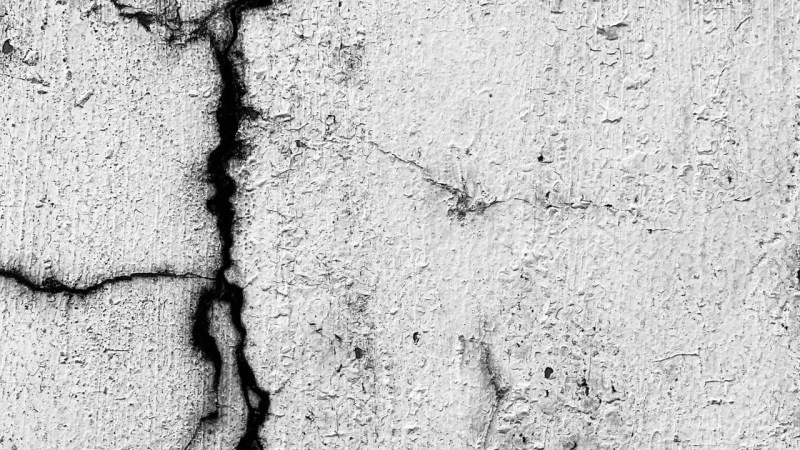
Pattern tells the story: a single clean line through concrete is structure, not finish.
Then watch for movement
The third check costs a pencil and a month. It is also the one that turns a guess into evidence.
Mark it
Pencil a tick at each end of the crack and note the date. Photograph it with something for scale, a coin works.
Wait a month
Swim season or not, give it thirty days. Movement in concrete is slow but steady.
Compare
A crack that grew past your marks, widened, or offset vertically is active. Active cracks do not heal, and every freeze-thaw cycle pries them wider.
Connecticut helps cracks along: water gets in, freezes, expands, and lets in more water. That cycle is the reason a small spring crack becomes a big fall problem, and the reason we take fall calls about cracks seriously.
Not sure what your crack is telling you?
Call and describe it: where it runs, whether it catches a nail, what the deck near it looks like. We will tell you whether it needs eyes on it.
Where cracks start, and why it is not random
A gunite shell does not crack in random places. It cracks where stress concentrates, and knowing the map helps you read what you find.
Skimmer and return penetrations. Every hole in a concrete shell is a stress riser, and the skimmer opening is the biggest hole in the pool. Cracks radiating from a corner of the skimmer throat are common enough that we check there first.
Steps and benches. Cast shapes with inside corners concentrate stress the way a notch weakens a plank. Hairlines here are frequent and usually cosmetic; clean single lines that continue past the shape into the wall are not.
The spa wall. A raised spa is a second structure attached to the first, with its own temperature swings. The joint region between spa and pool works harder than any other part of the shell.
The shallow-to-deep transition. The floor slope change is where the shell geometry shifts, and where ground movement under the pool shows up first.
A crack in one of these zones is not automatically structural, and a crack elsewhere is not automatically fine. But location plus width plus movement, read together, is most of the diagnosis before anyone gets in a truck.
What we do about each kind
| Finding | The move |
|---|---|
| Hairline crazing | Watch it. Address cosmetically at the next resurfacing. |
| Stable narrow crack | Seal and monitor. Cheap insurance against water intrusion. |
| Active or wide crack | Structural evaluation, then cut out and rebuild, stitch, or inject. Fix the cause of movement too. |
| Crack plus water loss | Leak test first so the repair targets the actual problem. |
The GS Rose position on crack work
If the shell is sound, we will not sell you structural work. And if it is not sound, new plaster over the problem is money in the water. We put the diagnosis in writing either way, so the quote makes sense next to the crack it describes.
Do not winter over an active crack
An active crack in September gets a full winter of freeze-thaw before anyone looks at it again. Water in the crack freezes, pries it wider, and lets in more water. Get it evaluated in the fall; the repair season you save may be your own.
Free download: pool crack inspection checklist
A ten-minute walkaround for CT pool owners. Print it, walk the pool, and know what you are looking at before anyone quotes you.
Frequently asked questions
Are hairline cracks in pool plaster normal?
Fine spiderweb crazing in plaster is common and usually cosmetic. It lives in the finish layer, not the shell. Worth watching, rarely worth panicking over.
When is a pool crack structural?
Width over an eighth of an inch, edges that are offset from each other, cracks that keep growing, or cracks paired with water loss all point past the finish and into the shell.
Can a cracked gunite pool be repaired?
Almost always, yes. Structural cracks are cut out, stitched or injected, and rebuilt. The key is fixing the cause of the movement, not just the crack.
Will resurfacing fix cracks in my pool?
Resurfacing fixes finish problems. A structural crack telegraphs right through new plaster, usually within a season or two. Structure first, finish second.
How do I know if a crack is leaking?
Watch your water level. Loss beyond roughly a quarter inch a day in summer, or any loss that continues with the pump off, deserves the bucket test and possibly a dye test at the crack.
Crack needs a real diagnosis?
GS Rose Construction evaluates and repairs pool cracks across Connecticut, structure first. Estimates are free, and so is being told it is only cosmetic.
Request an estimate