
Refinishing, resurfacing, replastering: in Connecticut pool work these three words describe the same family of job, renewing the surface you swim against. The words are used loosely across the industry, which is fine until two quotes use them differently and you cannot tell what you are comparing. Here is what each one means in practice, and how to make any quote say exactly what it includes.
Key takeaways
- Resurfacing is the umbrella term: remove or prepare the old interior surface, then apply a new one.
- Replastering is resurfacing specifically in plaster. Every replaster is a resurface; not every resurface is a replaster.
- Refinishing is the loosest word of the three and can mean anything from a full resurface to a cosmetic touch-up.
- Do not compare words, compare scope: prep method, material, thickness, and what happens to cracks.
What each word actually means
| Term | Common meaning | Watch out for |
|---|---|---|
| Resurfacing | The umbrella: old surface prepped or removed, new interior surface applied | Broad enough to hide the prep scope; ask which method |
| Replastering | Resurfacing done in plaster specifically | Sometimes used generically even when quartz or pebble is quoted |
| Refinishing | Anything that renews the look of the interior | The loosest term; can mean a full resurface or a patch and polish |
| Interior finish | The material itself: plaster, quartz, or pebble | Brand names get used as categories; ask for material and line |
None of these is a wrong word. The problem is only ever ambiguity, and the cure is scope language. A quote that says refinishing and then details full chip-out, bond coat, and a named pebble product is clearer than one that says complete resurfacing with no further nouns.
What the work involves, whatever it is called
Drain and inspect
The pool comes down, and the shell gets read properly for the first time in a decade: cracks, hollow spots, delamination.
Prep the surface
Chip out failed material, grind or acid-etch to open the surface, and repair what the old finish was hiding. This is the step that decides longevity.
Bond and apply
A bond coat ties new to old, then the finish goes on in a continuous pour of work, hand-troweled.
Fill and start up
Immediate refill, then weeks of careful chemistry while the finish cures. Startup is part of the job, not an afterthought.
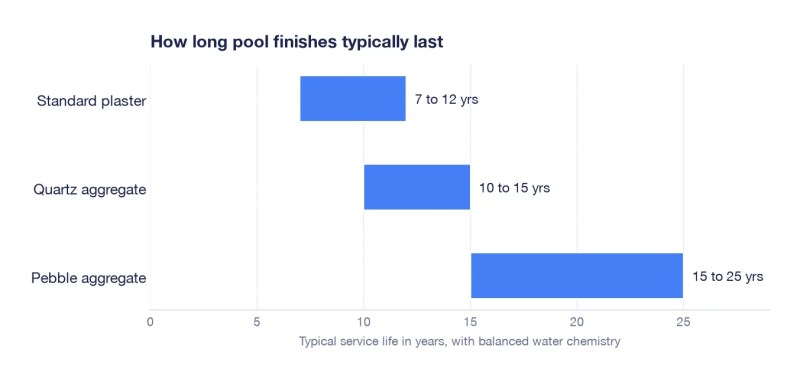
The material you choose sets the clock. Plaster typically runs 7 to 12 years, quartz 10 to 15, pebble 15 to 25, and balanced water chemistry can add years at every level while aggressive water subtracts them.
Which one your pool needs right now
If the surface is rough enough to grab swimsuits, stained past the point where chemistry helps, showing gray shell through the white, or dropping plaster chips into the skimmer basket, you need a genuine resurface, whatever the quote calls it. Those are end-of-life signals, and cosmetic work over them buys a season.
If the surface is sound but discolored, there are lighter interventions, acid washing among them, that improve appearance without renewing the surface. They are legitimate when the finish has real life left, and a delay tactic when it does not. An honest contractor will tell you which situation you are in, including when the answer costs them the bigger job.
The GS Rose position
We will use whichever word you used when you called, then put the actual scope in writing: prep method, repair allowance, bond coat, material and thickness, startup plan. Words are for conversation; scope is for contracts.
Two quotes using different words?
Call and read us both. We will tell you whether you are comparing the same job, even if you hire the other one.
Making any two quotes comparable
Ask every bidder the same five questions and the vocabulary stops mattering. What prep method, chip-out or full removal? What happens to cracks found under the old finish, and at what unit price? What bond coat? What material, brand line, and thickness? Who handles fill and startup chemistry, and for how long? Answers to those five make two differently worded quotes line up on the same page, and the gaps in the answers are usually the gaps in the price.
Free download: pool quote question sheet
The questions that expose a thin bid, one page, works on any pool quote: resurfacing, remodel, or new build.
Frequently asked questions
What is the difference between pool refinishing and resurfacing?
In practice, very little; both describe renewing the interior surface. Resurfacing is the standard umbrella term, refinishing is looser and occasionally means only cosmetic work. Compare scope, not vocabulary.
Is replastering the same as resurfacing?
Replastering is resurfacing carried out in plaster. Every replaster is a resurface, but a resurface might use quartz or pebble instead.
How long does a pool refinishing job last?
It depends on material: plaster typically 7 to 12 years, quartz 10 to 15, pebble 15 to 25. Water chemistry moves every one of those numbers in both directions.
Can you refinish a pool without draining it?
No. The surface is prepped and applied dry, so the pool comes down for the work. Any offer of a no-drain refinish is describing something other than a real resurface.
Does refinishing fix cracks?
Not by itself. Structural cracks are repaired first, then the finish goes over sound structure. New finish over a moving crack telegraphs through, usually within a season or two.
Time to renew the surface?
GS Rose Construction resurfaces gunite pools across Connecticut in plaster, quartz, and pebble, with scope in writing. Estimates are free.
Request an estimate