
Pool coping is the cap that runs around the edge of your pool, covering the top of the pool wall where the structure meets the deck. That is the short answer. The longer answer is that coping is one of the hardest working parts of a concrete pool, and in Connecticut it takes more abuse than any other part of the perimeter.
Key takeaways
- Coping caps the bond beam, the reinforced concrete ring at the top of the pool wall. Without it, water works straight into the structure.
- The classic Connecticut choices are natural stone and precast concrete. Installation quality decides lifespan more than material.
- A coping stone that rocks underfoot means the bond broke. Sometimes that is a mortar repair, sometimes the beam itself is failing.
- Never carry a loose stone into winter. Water in an open joint freezes in January, and ice always wins.
The three jobs coping does
We rebuild coping on pools across CT every season, and the same three jobs come up on every one of them. When any of the three stops happening, the pool starts paying for it.
It protects the bond beam
The bond beam is the reinforced concrete ring at the top of a gunite shell. Coping caps it. Without that cap, water works straight down into the structure.
It manages water
Good coping is pitched slightly away from the pool, so splash-out and rain drain toward the deck instead of behind the pool wall. Water that gets behind the wall freezes in January.
It ties the pool to the deck
The joint between coping and deck absorbs the movement between two separate structures. When that joint fails, the two start grinding against each other.
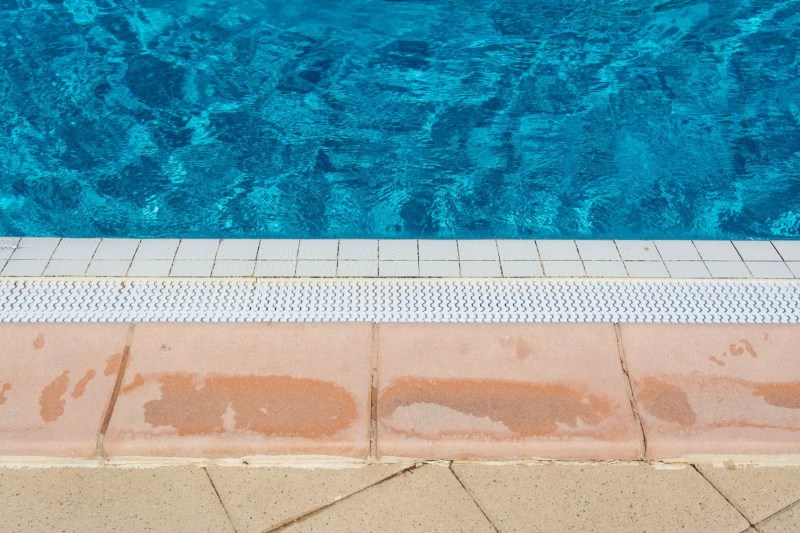
The working edge: waterline tile below, coping stone above, and the joint between them doing the quiet work.
Common coping materials in Connecticut
Four materials cover almost every pool we touch in the state. Each can last decades. Each can also fail in five years if the set is wrong, which is why the second column matters more than the first.
| Material | What to know |
|---|---|
| Natural stone | Bluestone and granite are the classic New England choices. Cool underfoot, excellent freeze-thaw record, highest cost. |
| Precast concrete | Consistent sizing and clean lines at a fair price. The set matters more than the piece. |
| Bullnose brick | Common on older CT pools. The brick usually outlasts its mortar joints. |
| Pavers | Match paver decks cleanly and repair easily. Edge restraint has to be done right. |
The GS Rose position on materials
On an older Connecticut pool, properly set natural stone or precast beats chasing the cheapest bid. The material is a one-time cost. A bad set is a repeating one. We would rather lose a job over that sentence than reset the same edge in three years.
How coping fails in Connecticut
Coping does not fail all at once. It follows a sequence, and every step of it is visible if you know where to look.
The joint opens. Mortar or sealant between stones, or between coping and deck, dries out and cracks. It looks cosmetic for a season.
Water moves in. Every rain and every splash-out now has a path to the top of the bond beam and the back of the pool wall.
January does the demolition. That trapped water freezes and expands. The expansion breaks the bond between stone and beam, pries joints wider, and in bad cases cracks the beam itself.
The stone starts rocking. By the time coping moves underfoot, the bond is already gone. The question left is whether the beam under it is still sound.
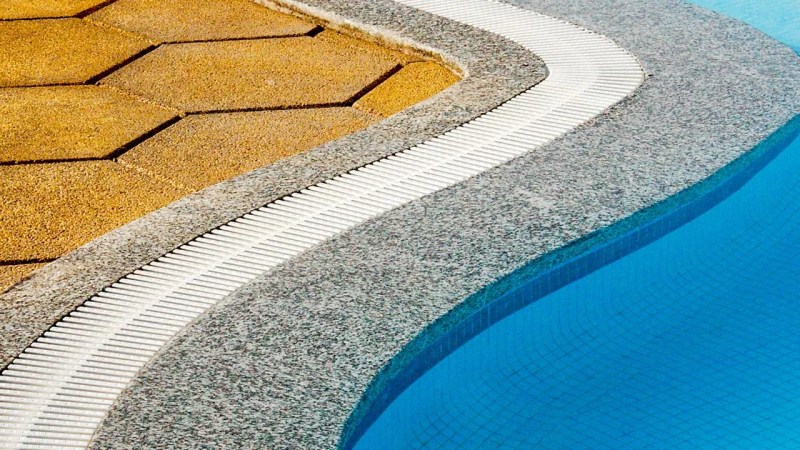
A healthy edge: coping pitched away from the water, joints tight, deck and pool meeting on their own terms.
A rocking stone in fall cannot wait until spring
A loose stone found in September has an open joint all winter: a full season of freeze-thaw working on the exposed beam. Re-bedding a stone in fall is a small job. The same edge in April is often beam repair.
Coping and waterline tile fail together
The waterline tile band and the coping above it share the same landlord: the bond beam. The tile is bonded to the face of the beam, the coping is bedded on top of it, and the joint between them is supposed to keep water out of both. That shared foundation is why the two problems so often arrive as a pair.
When tile starts popping off the waterline, homeowners usually call it a tile problem. Sometimes it is: a failed bond coat or frost working on grout lines. But if the beam behind the tile is cracking, the tile is just the first thing to let go, and new tile mortared onto a moving beam will not stay. Same story in reverse: coping that has been loose for a season or two has usually been feeding water down the back of the tile band all along.
This is why we quote the edge as a system. Tile, coping, and the joint between them get inspected together, priced together, and, when the beam needs work, sequenced together: beam repair first, then tile, then coping, then the deck joint. Doing them piecemeal in the wrong order means paying for access twice.
What you can check yourself
You do not need us for the first inspection. Walk the edge once a season, ideally at closing time, and look for three things: stones that move or click underfoot, joints where the mortar or caulk has cracked or fallen out, and any spot where the deck has sunk or lifted against the coping line. Ten minutes, barefoot, around the whole perimeter.
What that walk cannot tell you is why. A rocking stone can sit over a healthy beam or a failing one, and the fix is completely different. You cannot tell from above, and resetting a stone on a failing beam buys you one season at best. That is why we check the beam before we quote coping work. Fixing the same edge twice is the expensive way to do it once.
Found a loose stone or an open joint?
Call and describe what you see. We will tell you whether it can wait for the season or should not, and we will tell you if it is fine.
Free download: pool coping material guide
Stone, precast, brick, and pavers compared for Connecticut pools, plus the three things that decide how long any of them last.
Frequently asked questions
Is pool coping necessary?
Yes. On a concrete pool the coping caps the bond beam, protects the shell from water intrusion, and ties the pool to the deck. A pool without sound coping is a pool with an unprotected edge.
What is the most durable pool coping material?
Natural stone set on a proper base has the best freeze-thaw record in Connecticut. Precast concrete is close behind. Installation quality matters more than the material itself.
Why is my pool coping loose?
Usually water got into the joints, froze, and broke the bond, or the bond beam under the coping is deteriorating. Loose coping is worth a professional look because the cause is often below the stone.
Can I replace coping without redoing the tile?
Sometimes. If the waterline tile is sound and the bond beam is healthy, coping can be replaced on its own. When coping failed because of beam damage, the tile usually comes up with it.
How much does coping replacement cost in Connecticut?
It depends on material, linear footage, and what the bond beam looks like once the old coping is off. A site visit is the only honest way to price it.
Coping showing its age?
GS Rose Construction rebuilds pool coping across Connecticut, and we check the beam under it before we quote. Estimates are free.
Request an estimate