
Some pool deck cracks need a twelve-dollar tube of sealant. Some need a saw. The difference is not the crack, it is what is happening under it, and that is the part most quick fixes skip.
Key takeaways
- Shrinkage cracks are normal and cosmetic. Working cracks need flexible sealant. Settlement and heave mean the base moved.
- Rigid patch in a working crack pops out by spring. Flexible sealant is the only thing that survives Connecticut seasons.
- The expansion joint between deck and coping is the most important line of caulk on the property.
- A deck that keeps cracking is almost always a drainage problem wearing a concrete disguise. Fix the water first.
First, what kind of crack is it?
We repair and replace pool decks across Connecticut, usually as part of larger renovation work, and every cracked deck we look at sorts into one of three bins.
Shrinkage cracks
The fine ones that showed up in the first year and never changed. Every slab has them. Seal them for looks and water control, then stop worrying.
Working cracks
These open and close with the seasons. You can seal them, but only with flexible sealant, and you will re-do it periodically. Rigid patch in a working crack pops out by spring.
Settlement and heave
A slab section that dropped or lifted. Something moved underneath: washed-out base, roots, or frost. The concrete is the symptom.
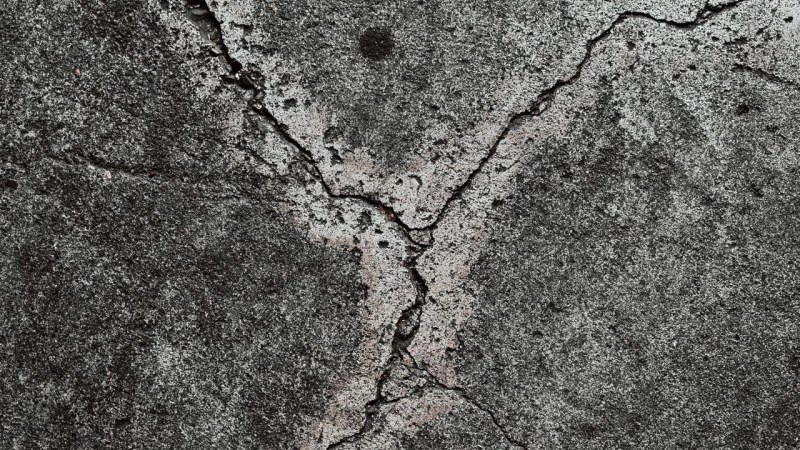
Settlement in progress: when one side of a crack sits higher than the other, the problem is under the slab, not in it.
Concrete pool deck repair: the fix menu, honestly ranked
| Fix | Right for | Wrong for |
|---|---|---|
| Flexible sealant | Stable and working cracks, control joints | Anything that has moved vertically |
| Patch or overlay | Surface spalling on a sound slab | Slabs that move seasonally |
| Joint rebuild at the coping | Failed deck-to-coping joints | Nothing. This one is almost always worth doing. |
| Section replacement | Heaved or settled slabs, corrected base | Skipping the base correction part |
| Full replacement | Widespread failure, bad slope | A deck with one bad slab |
The GS Rose position on deck quotes
A quote that only prices the concrete is half a quote. If nobody has explained what moved the slab and what will stop it moving again, the crack is coming back with interest. We price the cause and the concrete together or we say so.
The joint that matters more than the deck
The expansion joint between the deck and the pool coping is the most important line of caulk on the property. When it fails, water runs behind the pool wall, freezes, and starts working on the bond beam and the coping set. Half the coping jobs we do started as a failed deck joint nobody looked at.
If you check one thing after reading this, check that joint. It should be a continuous, flexible bead with no gaps, cracks, or places where it has pulled away from either side. Recaulking it is a modest job. The bond beam repair it prevents is not.
The fifty-foot problem that starts at one foot
A single failed foot of deck-to-coping joint is all winter needs. Water follows the joint behind the wall, freezes against the beam, and by spring the coping above it is loose. Walk the joint every fall closing; it takes two minutes.
Fix the water first
A deck that keeps cracking is almost always a drainage problem wearing a concrete disguise. Water ponding against the pool, downspouts dumping next to the slab, or a deck pitched toward the house all keep the base wet, and a wet base moves when it freezes.
So the order of operations is fixed: fix the water first, then fix the concrete once. Regrade, redirect the downspout, add the drain, whatever the yard needs. Concrete repairs on top of an unfixed water problem are rented, not owned.
Deck cracking in the same spot every year?
Call and describe where the water goes when it rains. That answer usually tells us more than the crack does.
What replacement day actually buys you
When a deck does cross the line into replacement, the demolition is the least interesting part of the job. The value is in what gets corrected while the slab is gone.
The base gets rebuilt and compacted, which is what the original deck often never got. The slope gets set so water sheds away from the pool and the house instead of toward either. Drainage goes in where the yard needs it, a channel drain or a gravel edge, while the trench is already open. Control joints get placed where the slab wants to crack anyway, so future cracking happens on a straight line you chose instead of a jagged one you did not. And the deck-to-coping joint gets built new, as a proper flexible joint, rather than inherited.
That list is also the checklist for judging a replacement quote. If the price is all concrete and no base, slope, or drainage, the new deck is on schedule to become the old deck.
Free download: pool deck crack repair guide
The full fix menu on one page, the joint walk, and the rule that saves money: fix the water first, then fix the concrete once.
Frequently asked questions
Can cracked pool deck concrete be repaired?
Yes. Stable cracks get flexible sealant, surface damage gets patched or overlaid, and heaved or settled sections get cut out and repoured on a corrected base.
Why does my pool deck keep cracking in the same place?
Because the cause is under the slab, usually water movement or a soft base. Concrete repairs on top of an unfixed base problem are rented, not owned.
Are pool deck cracks dangerous for the pool?
They can be. Cracks near the coping let water behind the pool wall, where freeze-thaw goes to work on the bond beam. A deck crack that lines up with a pool wall crack deserves a professional look.
Should I seal pool deck cracks myself?
Small stable cracks, sure. Use a flexible masonry sealant, not rigid filler. Anything wide, moving, or near the pool edge is worth an evaluation first.
When is full deck replacement worth it?
When cracking is widespread, slabs have moved, or the deck slopes toward the pool. Replacement is also the one chance to fix drainage and slope permanently.
Deck past the sealant stage?
GS Rose Construction repairs and replaces pool decks across Connecticut, drainage included. Estimates are free.
Request an estimate