
A pool needs resurfacing every 7 to 25 years, and where yours lands in that range depends on two things: what the finish is made of, and how the water was kept. Standard plaster sits at the short end. Pebble aggregate sits at the long end. Chemistry decides whether you see the top or the bottom of each range.
Key takeaways
- Plaster typically runs 7 to 12 years, quartz 10 to 15, pebble 15 to 25. Balanced water adds years, acidic water subtracts them.
- The surface is the evidence: rough texture, stains that will not brush out, gray showing through, and plaster chips in the skimmer basket.
- In Connecticut a worn finish is not cosmetic. Water that reaches the shell freezes inside it every winter.
- Fall is the smart time to book. Call in April and you are usually swimming in July.
What each finish gives you
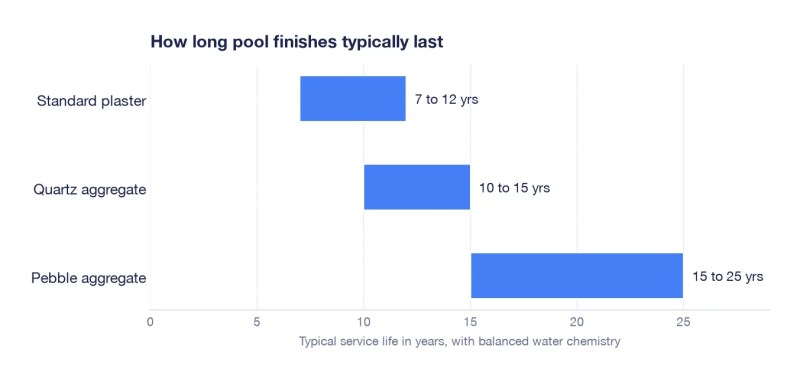
Those are the typical ranges we see for concrete pool resurfacing in Connecticut with reasonably balanced water. We have seen plaster die at year five in a pool that ran acidic, and we have seen it push past twelve in a pool that was watched like a bank account.
The signs your finish is done
The calendar is a guide. The surface is the evidence. Four signs cover most of it.
Rough texture
A finish that grabs swimsuits or scrapes feet has lost its cream layer. It gets worse, never better.
Stains that will not brush out
When stains stop responding to chemistry and brushing, they are in the finish, not on it.
Gray showing through
Dark patches where the white is gone mean you are looking at the shell. That is the finish telling you it already quit.
Chips in the skimmer basket
Flakes of plaster in the basket mean the surface is delaminating somewhere.
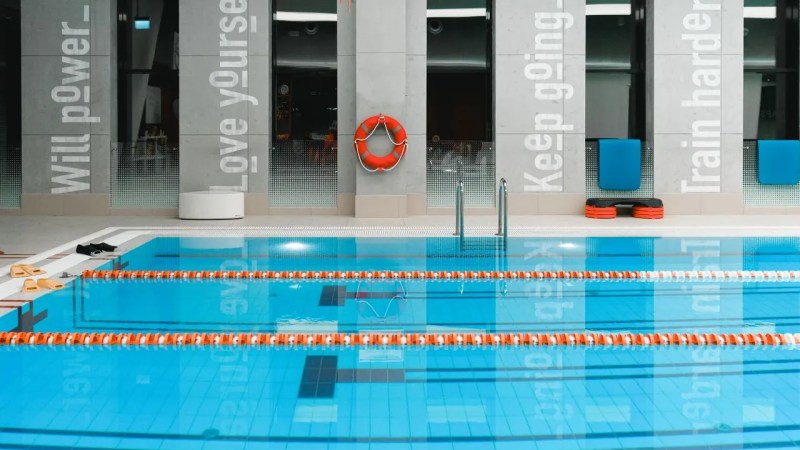
What year twelve looks like from inside the pool. The shell under this finish is usually fine; the finish is done.
Seeing one of these signs?
Call and describe the surface. We will tell you whether it has seasons left or the clock has run out, either way.
How the job actually goes
Resurfacing has a reputation for mystery it does not deserve. Here is the whole sequence.
Drain
The pool comes down. There is no such thing as a no-drain resurface; anyone offering one is selling something else.
Prep
The old surface gets chipped, ground, or removed where it has failed, and the shell gets inspected. This is where any structural surprises show up, and where they should be fixed.
Bond and finish
A bond coat ties the new finish to the old shell, then the new plaster, quartz, or pebble goes on in a continuous pour of work, troweled by hand.
Cure and startup
The pool refills right away, and the first weeks of water chemistry decide how the finish cures. Startup done right is part of the job, not an extra.
The work itself usually runs from several days to about two weeks once it starts. What stretches timelines is scheduling and weather, which is exactly why the booking season matters.
Choosing the next finish
Resurfacing is also the one moment you get to change what the pool feels like, so the material question deserves more than a price comparison.
Standard plaster is the classic white finish: the lowest cost, the brightest water, and the shortest life. It shows chemistry mistakes fastest, which is either a bug or an early-warning feature depending on how you run your water.
Quartz blends crushed quartz into the plaster. It buys hardness, stain resistance, and a few extra years, plus color options that shift the water from tropical light blue to deep lake blue. The middle path for a reason.
Pebble is the marathon runner: 15 to 25 years, the most textured underfoot, and the most forgiving of imperfect chemistry. It costs the most and turns the pool a rich mottled color that either sells the house or does not match it, so look at finished pools, not sample boards.
The honest tiebreaker: if you plan to be in the house past year ten, the longer finishes usually win the math. If you are staging to sell, bright new plaster photographs like a brochure.
Why waiting costs more here
The finish is the waterproof jacket on the gunite shell. In a warm climate a worn finish is mostly a cosmetic problem. In Connecticut, water that reaches the shell freezes inside it every winter. Wait two extra seasons and the resurfacing quote starts including structural prep it did not need before.
The GS Rose position on timing
Fall is the smart time to book this work. The pool is closing anyway, contractors have calendar room, and the new finish is ready when the cover comes off in spring. Call in April and you are usually swimming in July.
The expensive version of waiting
Gray patches showing through in August means the shell is already meeting water. Two more seasons of freeze-thaw on an exposed shell is how a resurfacing quote grows a structural line item. The cheap version of this job is the early one.
Free download: resurfacing readiness checklist
The end-of-life signs, what to note before you get quotes, and how to time the project so you do not lose a swim season.
Frequently asked questions
How often do gunite pools need to be resurfaced?
Standard plaster typically runs 7 to 12 years, quartz 10 to 15, pebble 15 to 25. Water chemistry is the biggest variable; balanced water adds years, aggressive water subtracts them.
How long does it take to resurface a pool?
The work itself usually runs from several days to about two weeks once it starts, then the new finish cures while the pool refills and the chemistry gets balanced.
Can you resurface a pool without draining it?
No. The pool comes down, the old surface gets prepped or removed, and the new finish goes on dry. Anyone offering a no-drain resurface is selling something else.
What happens if I wait too long to resurface?
The finish is what protects the gunite shell. Once it wears through, water works on the structure itself, and a resurfacing job starts turning into a repair job.
Does resurfacing fix leaks or cracks?
Not structural ones. Cracks in the shell get repaired first, then the new finish goes over sound structure. Finish over a moving crack fails fast.
Finish on its last seasons?
GS Rose Construction resurfaces gunite pools across Connecticut in plaster, quartz, and pebble. Book fall, swim on schedule. Estimates are free.
Request an estimate